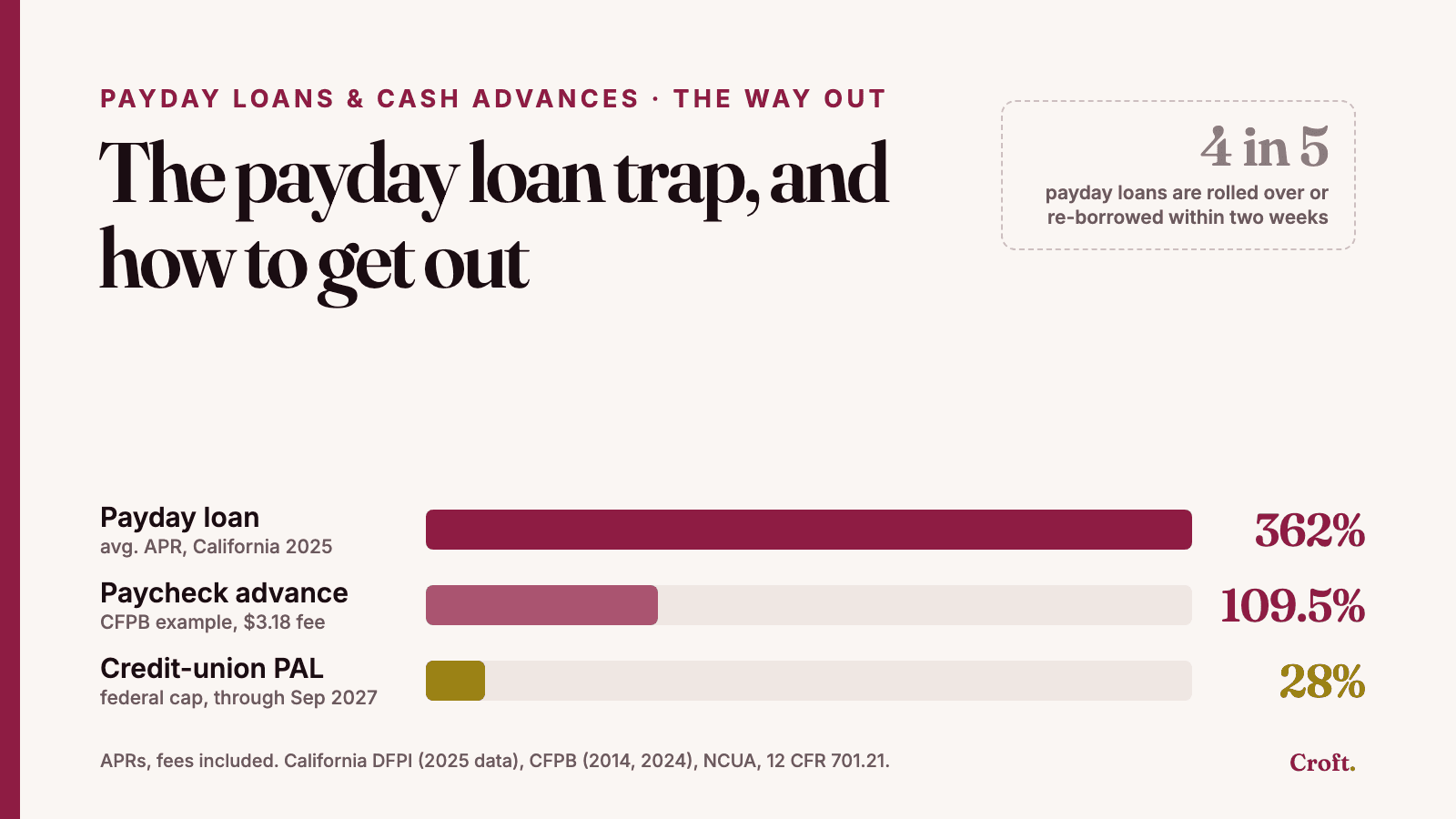
Croft's position: cash advance apps keep people short, and we want people off them for good. How the cost adds up, why the payback cycle repeats, and, if you use one, a step-down plan to $0.
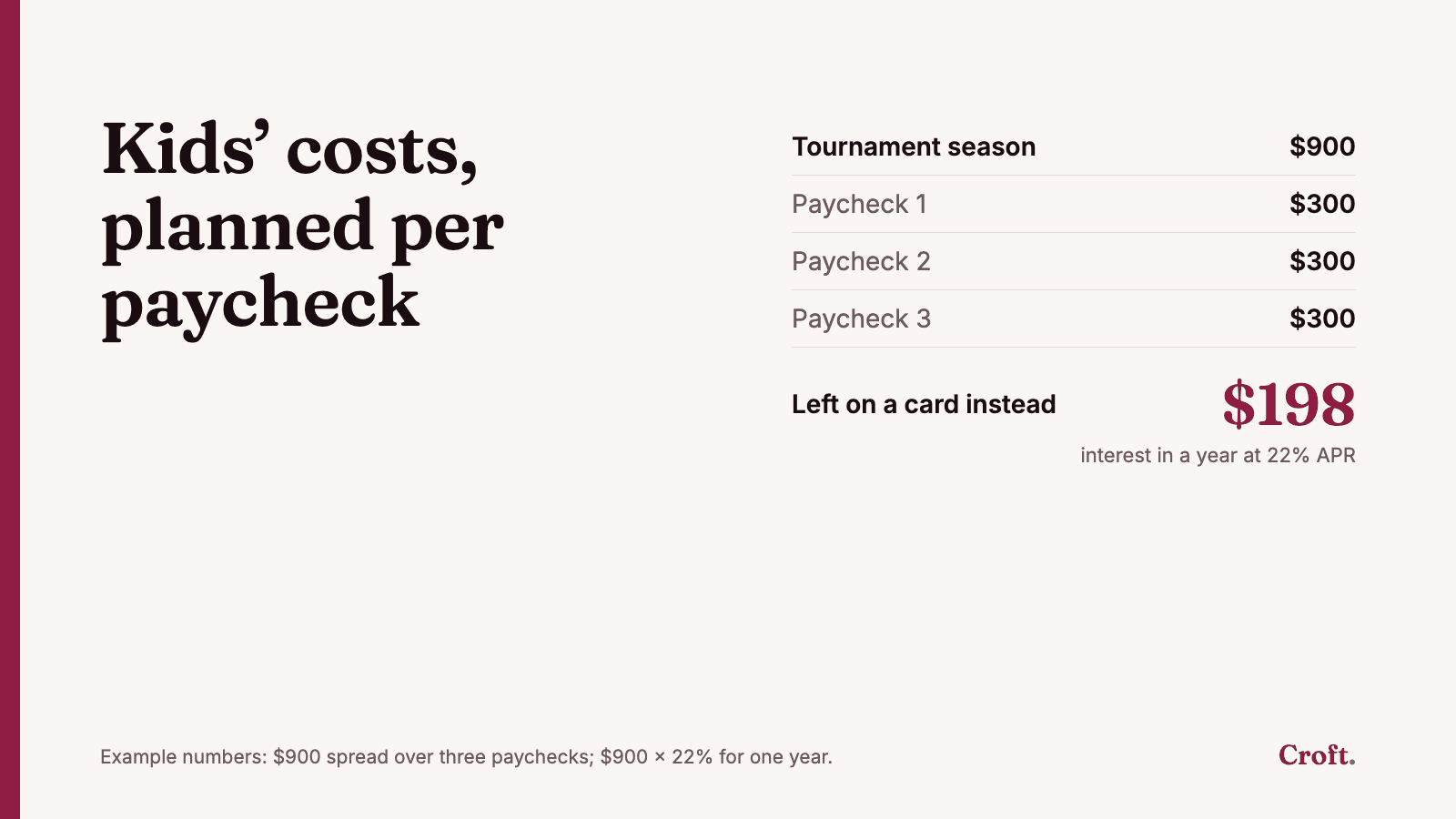
Most kid costs aren't random. Sports seasons, camps, school costs and child care come on dates you can see coming. Here's how to spread them across your paychecks, a $900 example, what the same $900 costs on a 22% card, and what to do when a season doesn't fit.
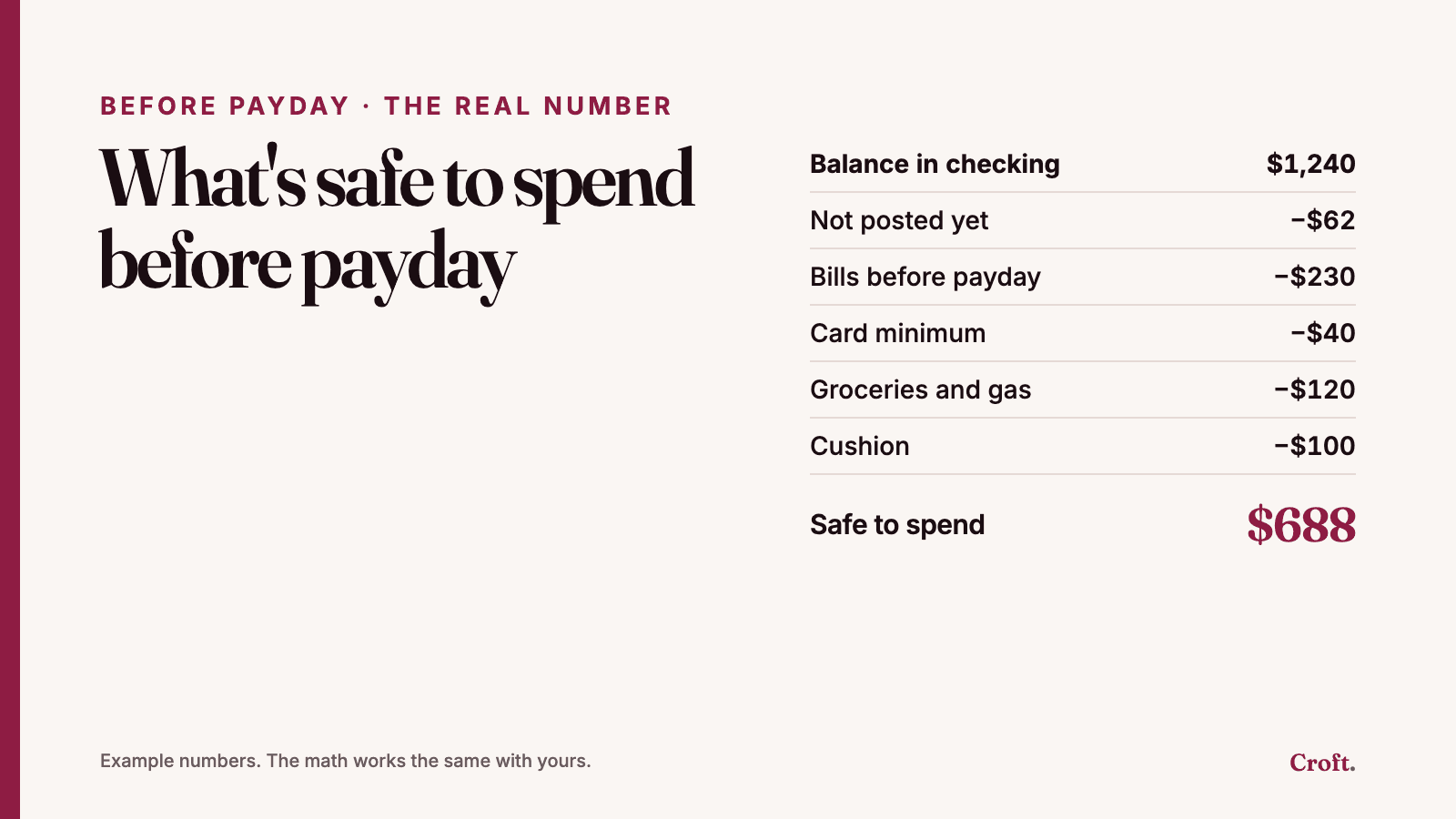
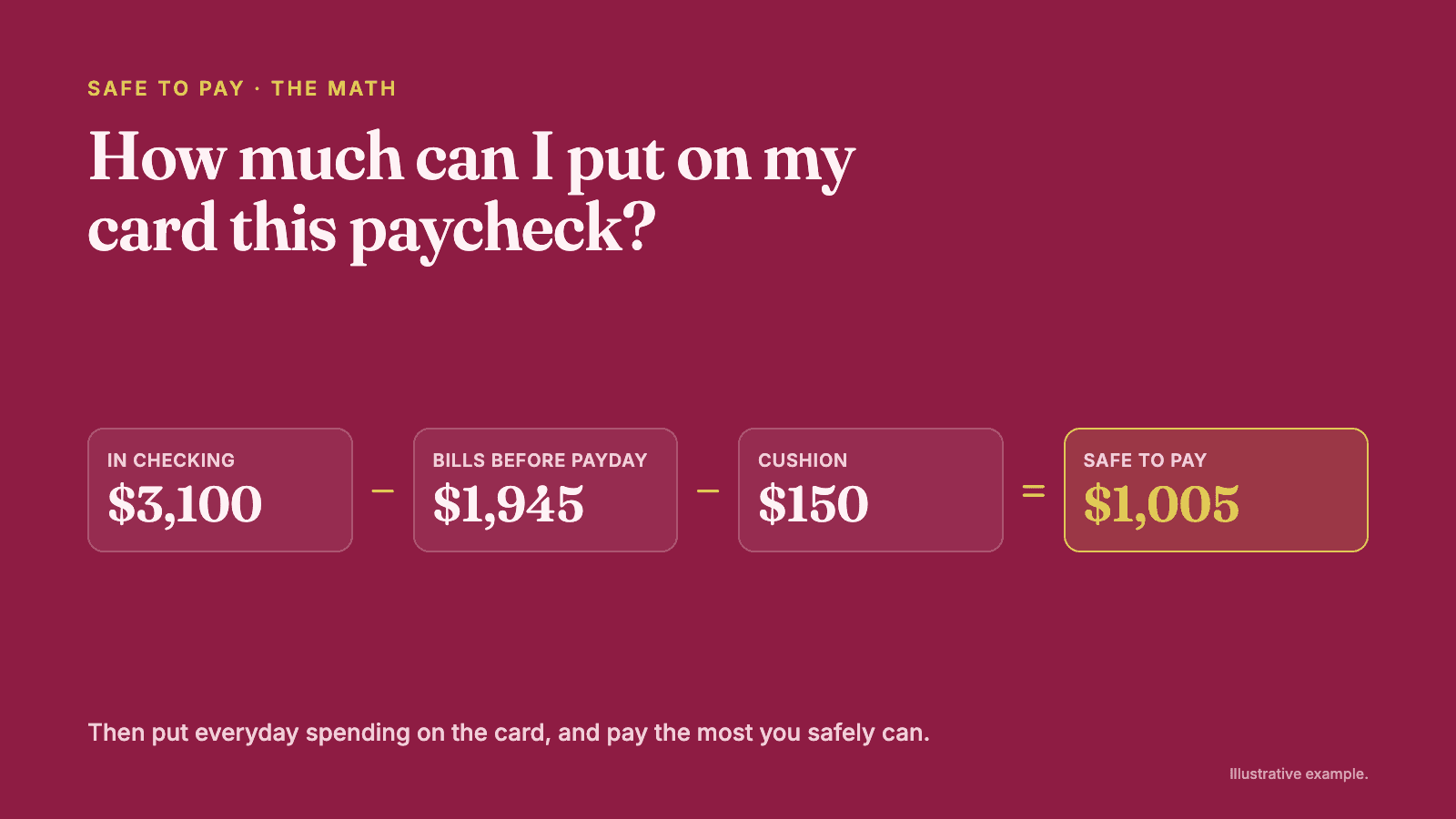
Your bank balance isn't what you can spend. Here's the simple math for what's actually safe before your next paycheck, a worked example, and why the low point before payday matters most.
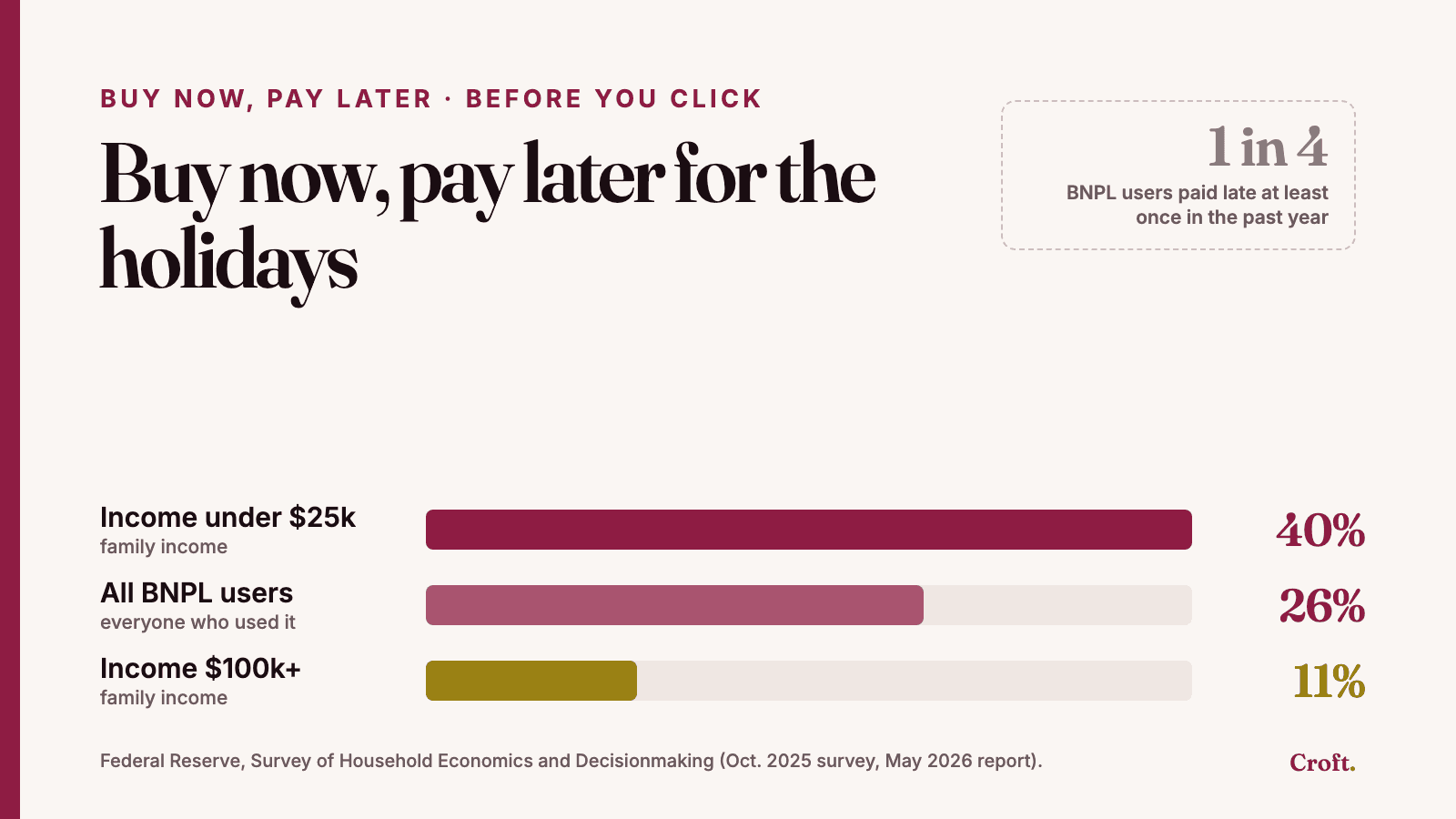
Pay in 4 can be a fair deal, or it can land in rent week and set off a bank fee. Here's when buy now, pay later helps, when it hurts, a quick checklist before you click, and how to plan each payment into your paychecks.
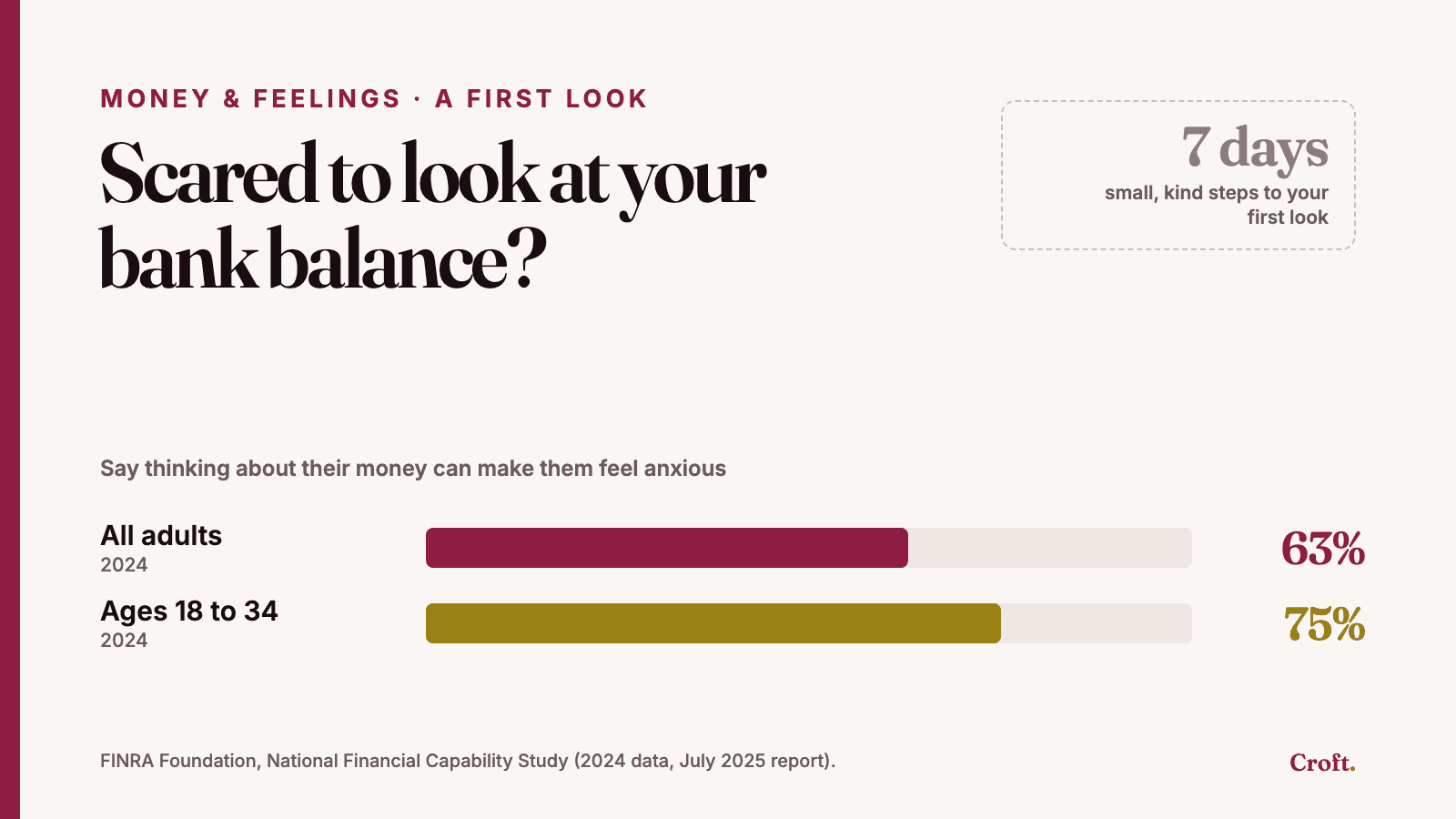
Not wanting to look at your bank balance is common, and it makes sense. Not looking doesn't make the worry go away, though. Here's why looking feels so hard, a simple 7-day plan for a first look, and kind words to say to yourself along the way.
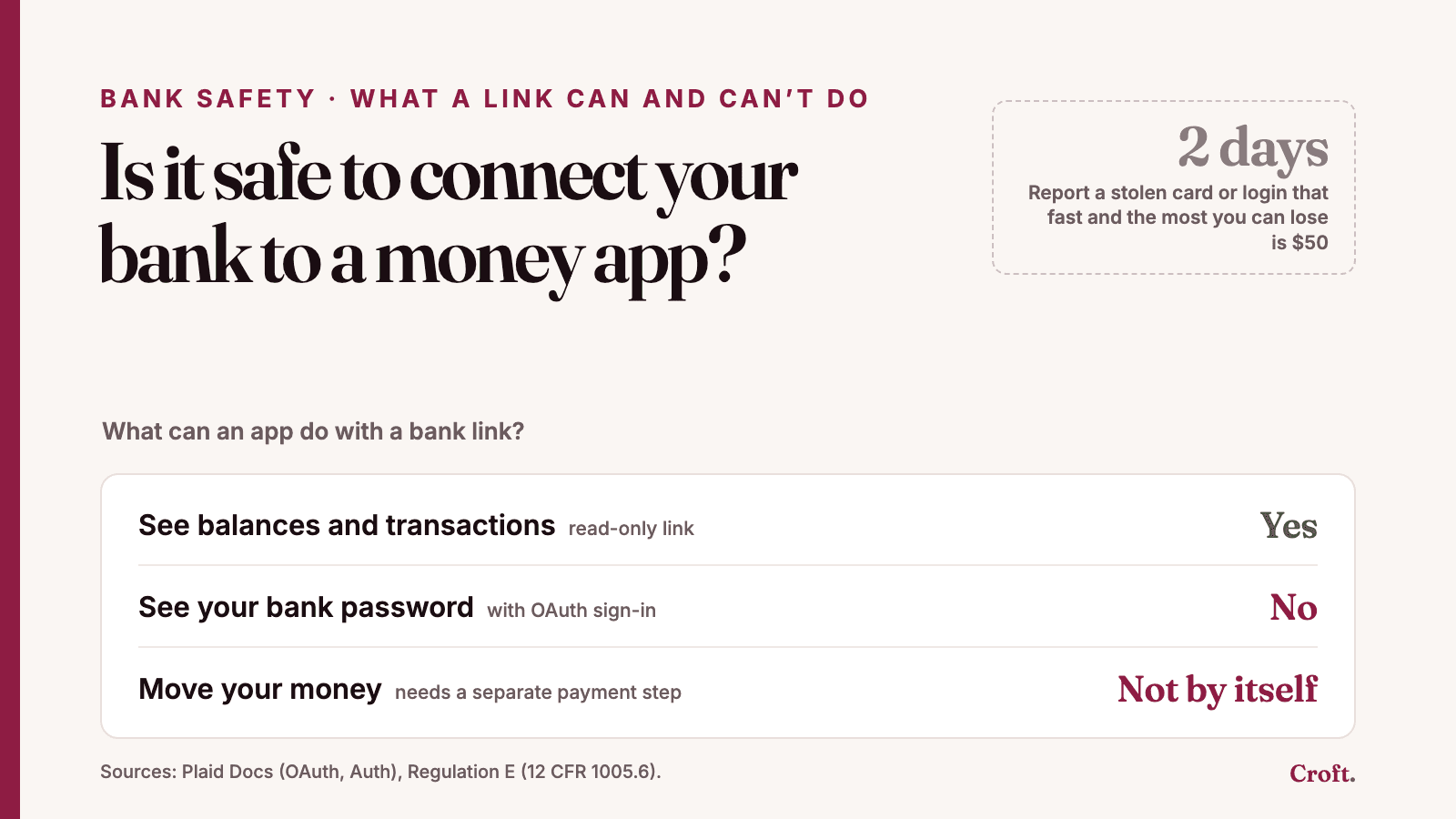
Usually yes, if you choose the app with care. Here's how a bank link works, what an app can and can't do with it, the rules that protect you, red flags to watch for, and how to see and turn off access any time.
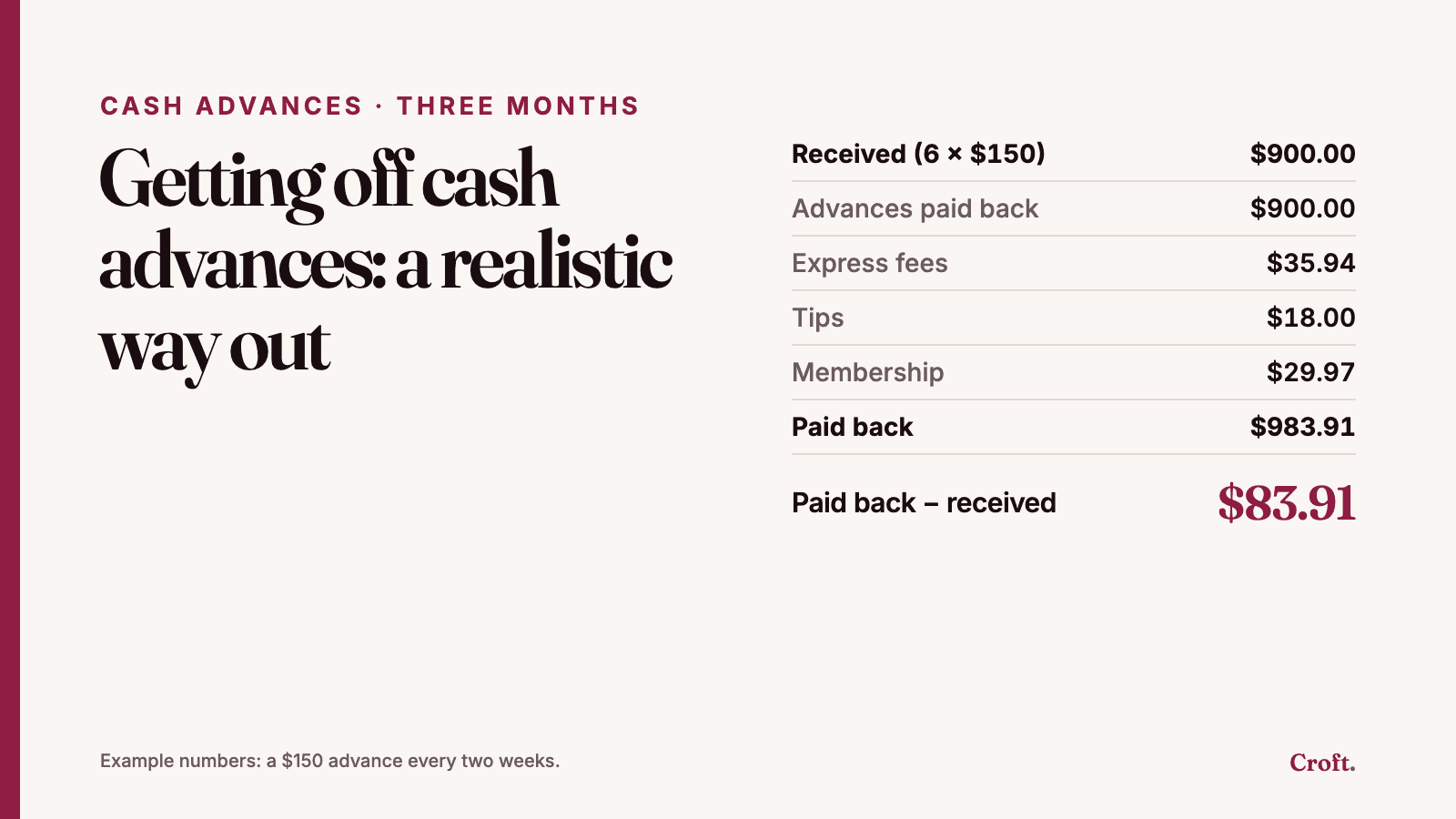
A payday loan or cash-advance app gets you to the next paycheck, then takes a big bite out of it, so you borrow again. Here's the math on a $400 loan and a $100 app advance, why it's hard to stop, and the steps that get you out, one loan at a time.
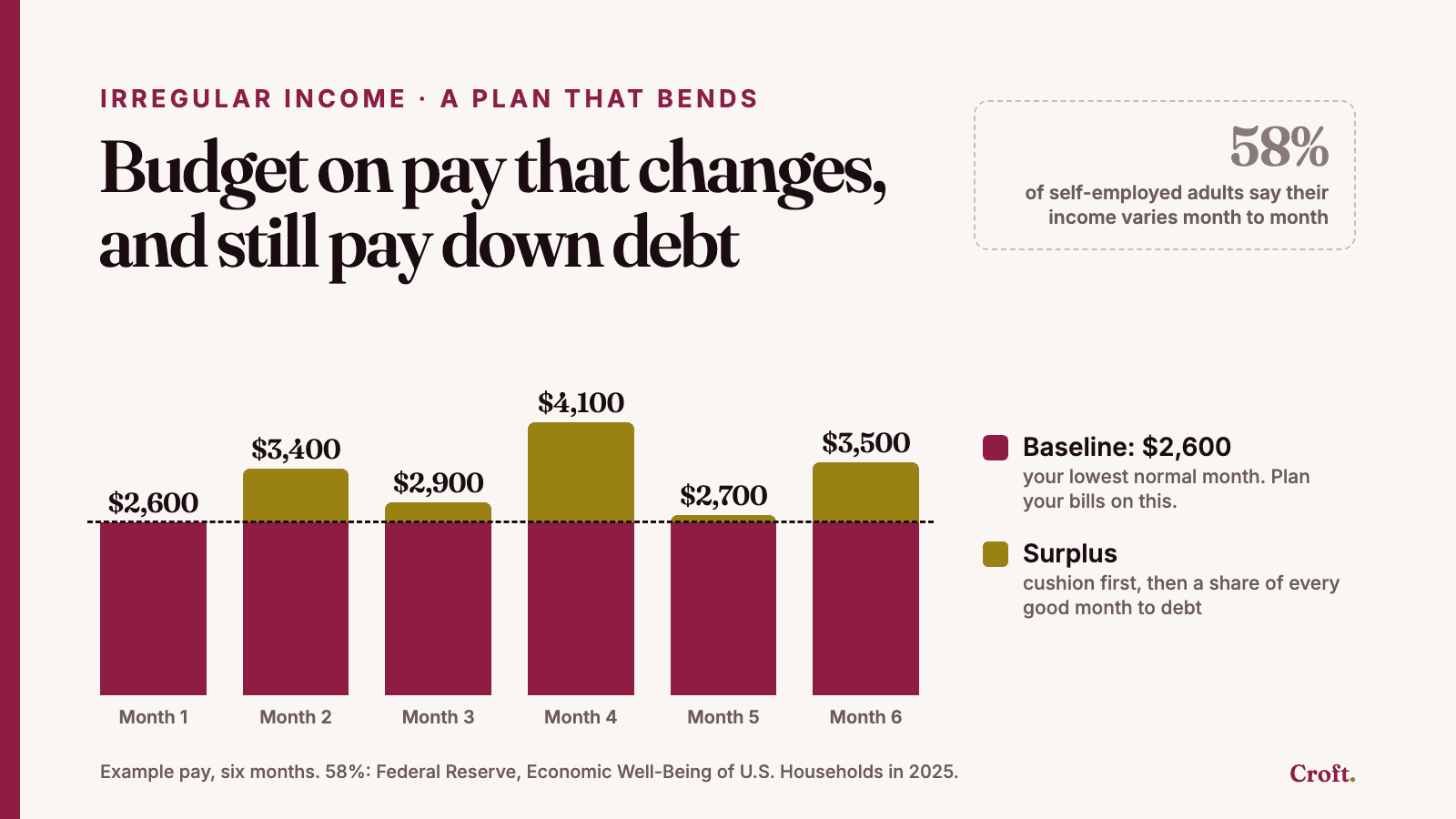
Paid by the hour, in tips, by the job or on commission? Plan on your lowest normal month, not your average. Fill a one-month cushion first, then send a share of every good month to your highest-rate debt. Here's the method, with a worked example on a $6,000 card.
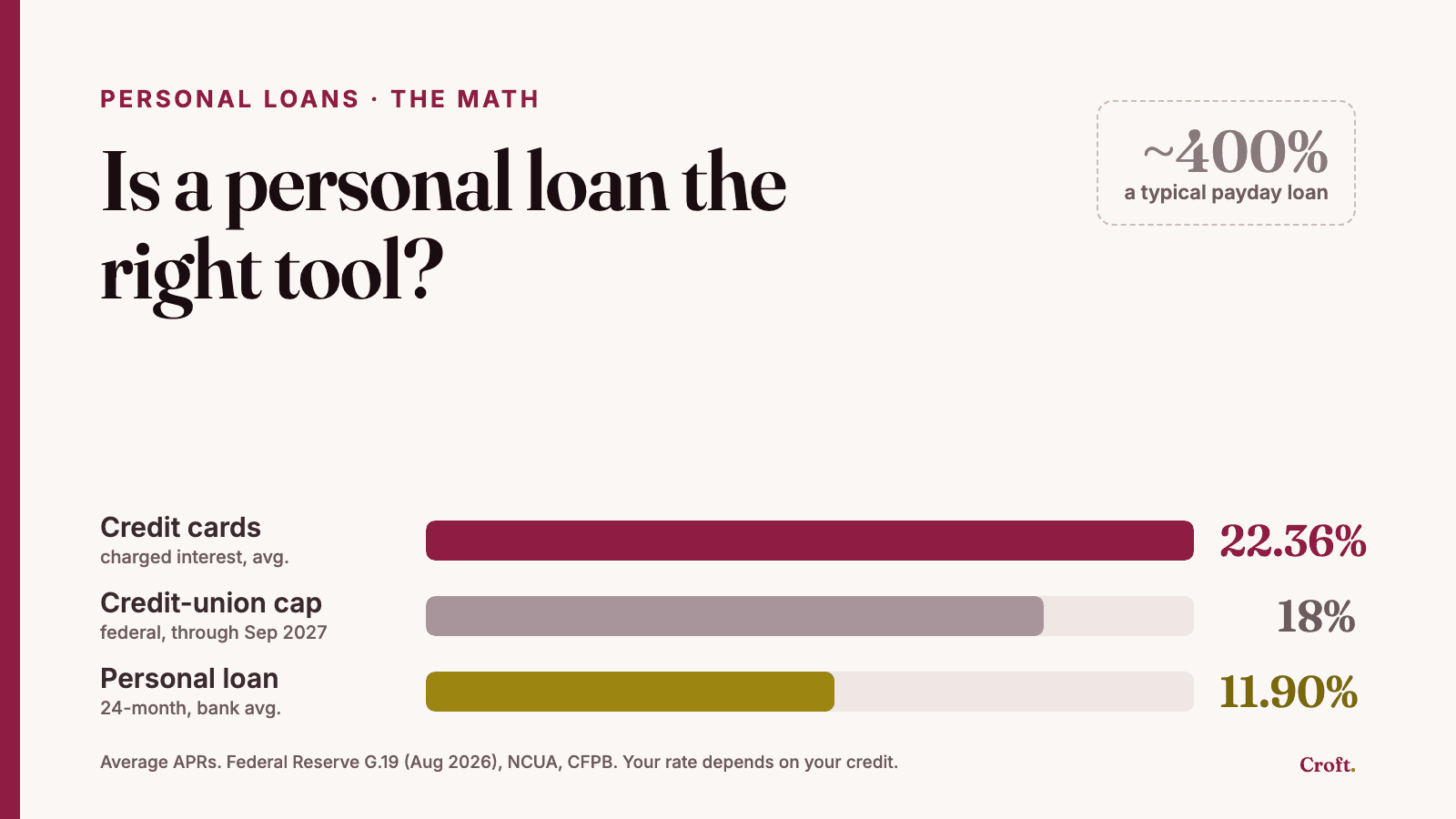
A personal loan can replace expensive, open-ended card debt with a cheaper, fixed payoff. It only works if the payment fits your budget and you don't run the cards back up. Here's how to tell, with the math worked out on a $12,000 example and the alternatives worth checking first.
Take what's in checking, subtract every bill due before your next paycheck and a small cushion. What's left is the most you can safely pay. Then let a card absorb everyday spending and pay the most you can each payday.
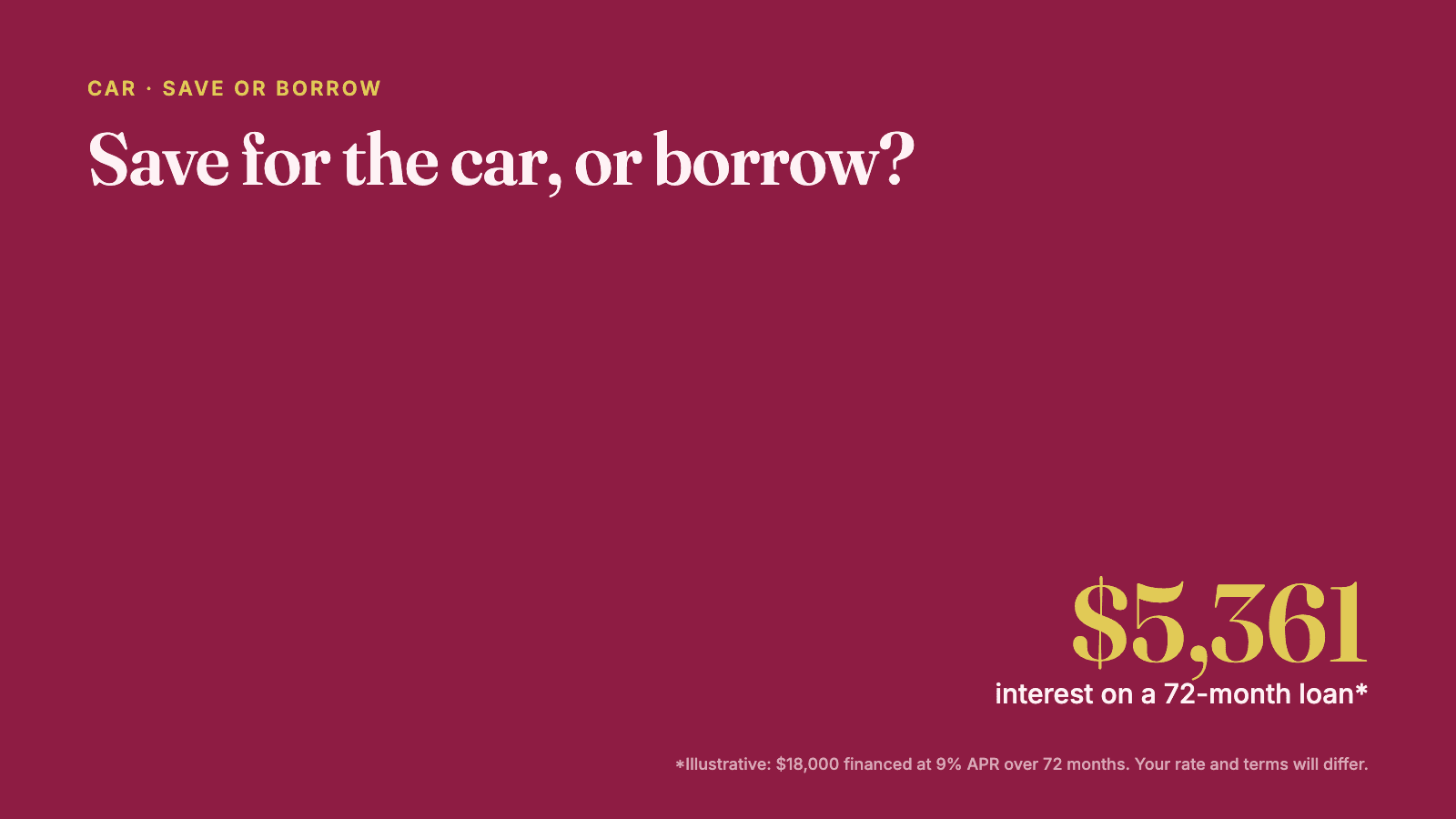
If your current car can last and you carry card debt, save first: clear the 24% card, then buy with cash or a big down payment. If you need a car now for work, a short, low-APR loan with money down is fine, as long as the payment fits your paycheck.
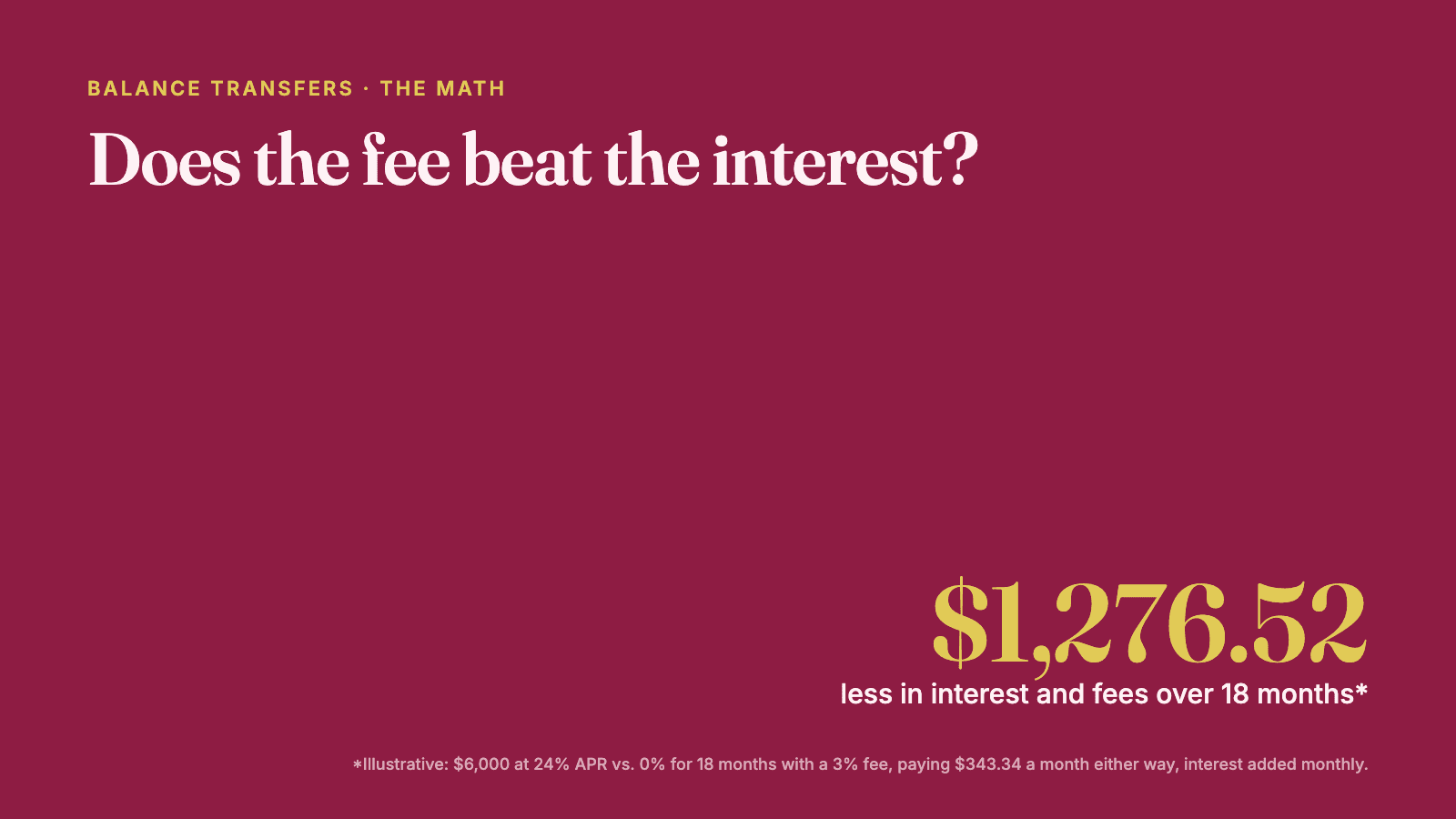
A balance transfer helps when the fee is less than the interest you'd pay, you can clear the balance before the 0% rate ends, and you stop adding charges. Here's the math, with a $6,000 example and a $200-a-month case.
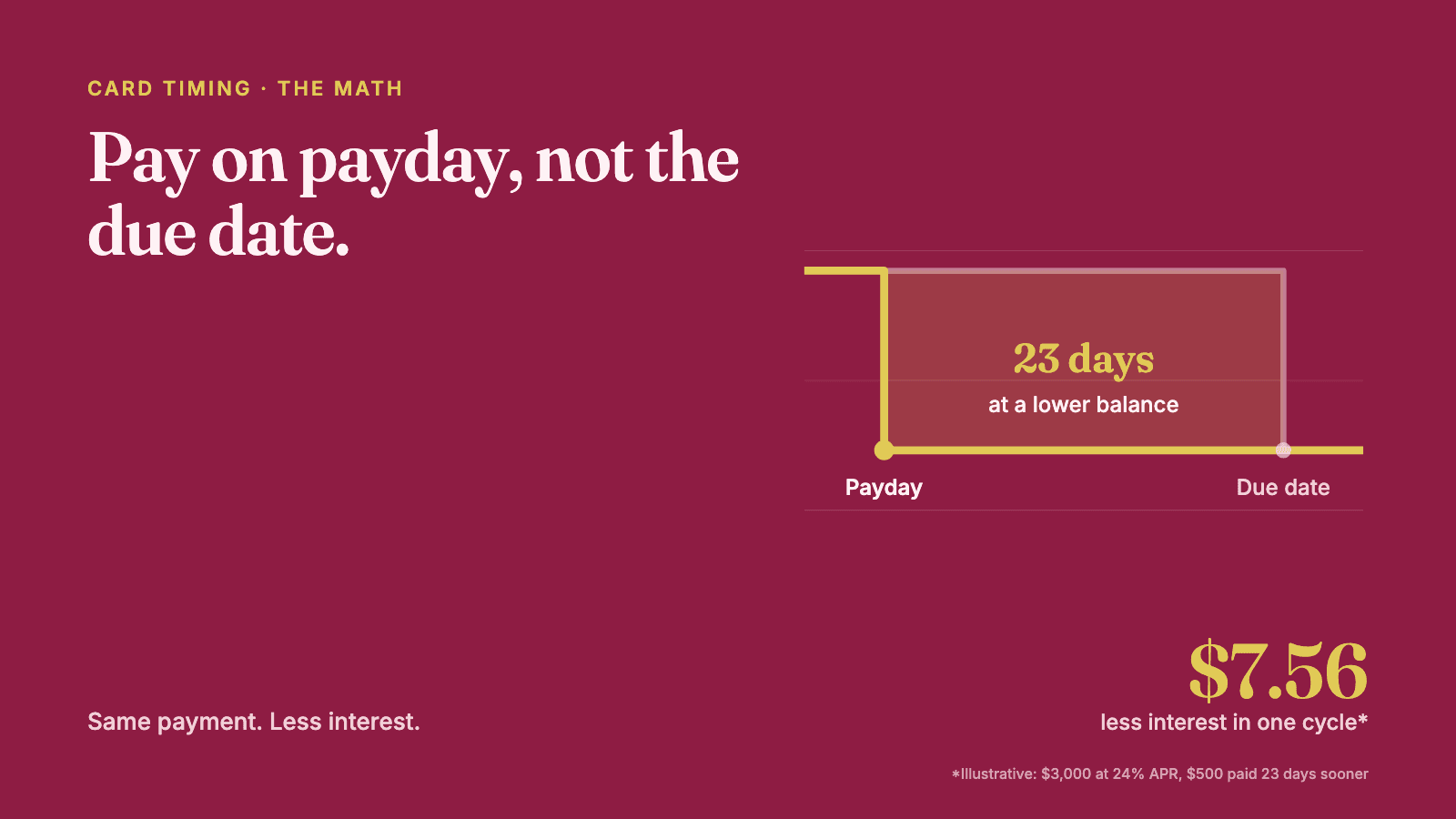
Yes, if you carry a balance. Most cards charge interest on your average daily balance, so paying the same amount right after payday instead of on the due date means less interest. Here's the math.
· 4 min read
Free tools
Quick calculators that run in your browser. No sign-up.